

Articles & News
Thought leadership and practical guidance from the floWolf team.
Agents, Not Operators: How crm.care by floWolf Is Rewiring Marketing Operations

Marketing operations teams have spent a decade perfecting the manual workflow: nurture streams built field by field, segmentation rules stitched together in Salesforce Account Engagement or HubSpot, personalization logic that takes a sprint to configure and another sprint to fix. That model has reached its limit, and it's exactly the problem crm.care by floWolf was built to remove.

🧱 The Workflow-Builder Era Is Over
For years, marketing automation maturity was measured by how many workflows a team could build by hand: more branches, more conditional logic, more if/then rules stacked inside Account Engagement or HubSpot. The platforms rewarded configuration depth. The teams that won were the teams that could build the most elaborate machine manually.
That assumption no longer holds. Personalization expectations and channel count have climbed far faster than marketing ops headcount, while buyers now expect individualized messaging at every touchpoint, not segment-level personalization. You cannot hand-build a workflow for every individual account. Nobody ever could. The old model was designed to solve for segments, and segments are no longer good enough.
The shift underway isn't "more automation." Automation has lived inside Account Engagement and HubSpot for years. The real shift is from automation that requires a human to configure every rule, to automation run by an AI agent capable of building, adjusting and personalizing the workflow itself. That's a different category of tool, closer to how engineering teams moved from manual deployment to CI/CD, and it's the category crm.care was built for.
🧭 Where Does Your Stack Actually Stand?
Before adopting an AI agent layer, most teams overestimate how automated they already are. Account Engagement and HubSpot both make it easy to confuse "we have workflows" with "we have automation that scales." Score yourself honestly against these four areas; most teams land lower than they expect.
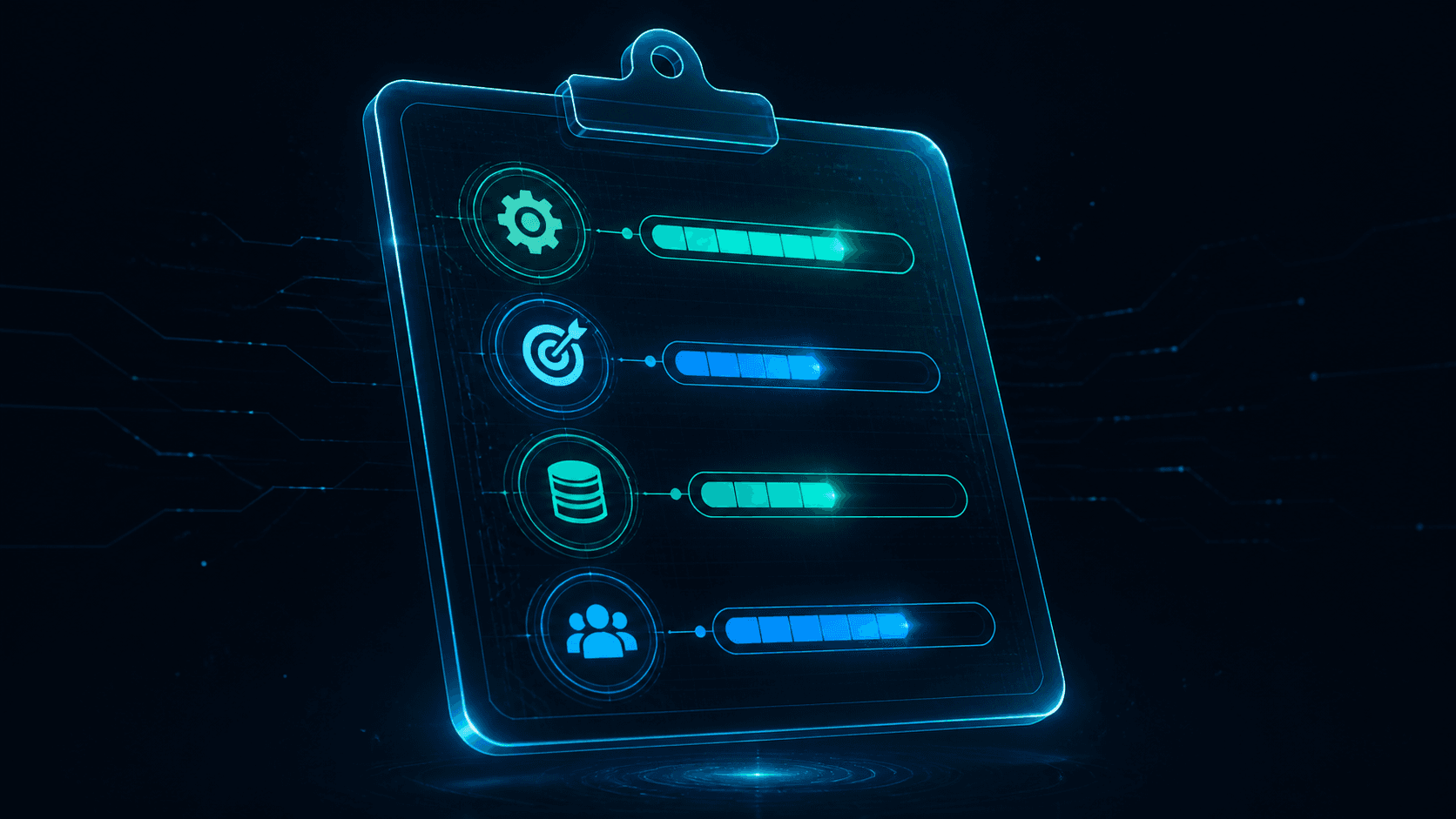
Configuration load
- A new campaign can be built and launched in under a day, without a developer ticket.
- Segmentation rules update themselves as new behavioral data arrives, rather than being rebuilt by hand.
- Campaign managers spend more time on strategy than on workflow QA.
Personalization depth
- Messaging varies by individual account signal, not just by static segment.
- Content and send time adjust in real time based on engagement, not a fixed schedule.
- Personalization logic doesn't require a specialist to touch once it's live.
Data and system fluency
- Your instance talks to CRM, product usage and intent data without manual exports.
- Lead scoring updates dynamically as new signals arrive.
- A non-technical marketer can ask a plain-language question and get an answer, without filing a request to RevOps.
Team capacity
- Your team has shipped something new in the platform in the last 30 days, not just maintained what exists.
- No single person is a bottleneck for campaigns launching on schedule.
- Nobody on the team describes their role as "mostly troubleshooting broken workflows."
If most of that list reads as aspirational rather than descriptive, the platform is underused relative to its potential, and the team is likely absorbing work the software should be doing. That gap, not budget or platform choice, is exactly where an AI agent layer earns its place.
🤖 The crm.care Operating Model
floWolf built crm.care to answer one question we kept hearing inside our custom agent engagements: why does getting more out of Account Engagement or HubSpot always require more building? The answer is a layer of self-service AI agents that sit on top of the stack you already run and do the configuration work themselves. Not a new CRM, not a migration; an AI-Native layer that makes the platform you already pay for do what it was always capable of.
The model rests on four pillars.
Autonomous campaign construction. Agents build the workflow, not the operator. Give an agent a campaign objective in plain language, and it constructs the sequence, segmentation and trigger logic directly inside your existing Account Engagement or HubSpot instance. What used to take a sprint takes an afternoon.
Personalization at the point of execution. Agents read live signal (engagement history, firmographic data, product usage where available) and adjust content, cadence and channel at send time, closing exactly the gap the checklist above measures.
Native integration, not replacement. crm.care deploys on top of the instance you already run. No rip-and-replace, no new data model to learn, no migration project competing with the campaigns it's meant to accelerate.
Human-in-the-loop governance. Autonomous doesn't mean unsupervised. Every agent action is visible, auditable and reversible. Marketing operations leaders set the guardrails (approval thresholds, brand voice constraints, escalation triggers) and the agents operate inside them.
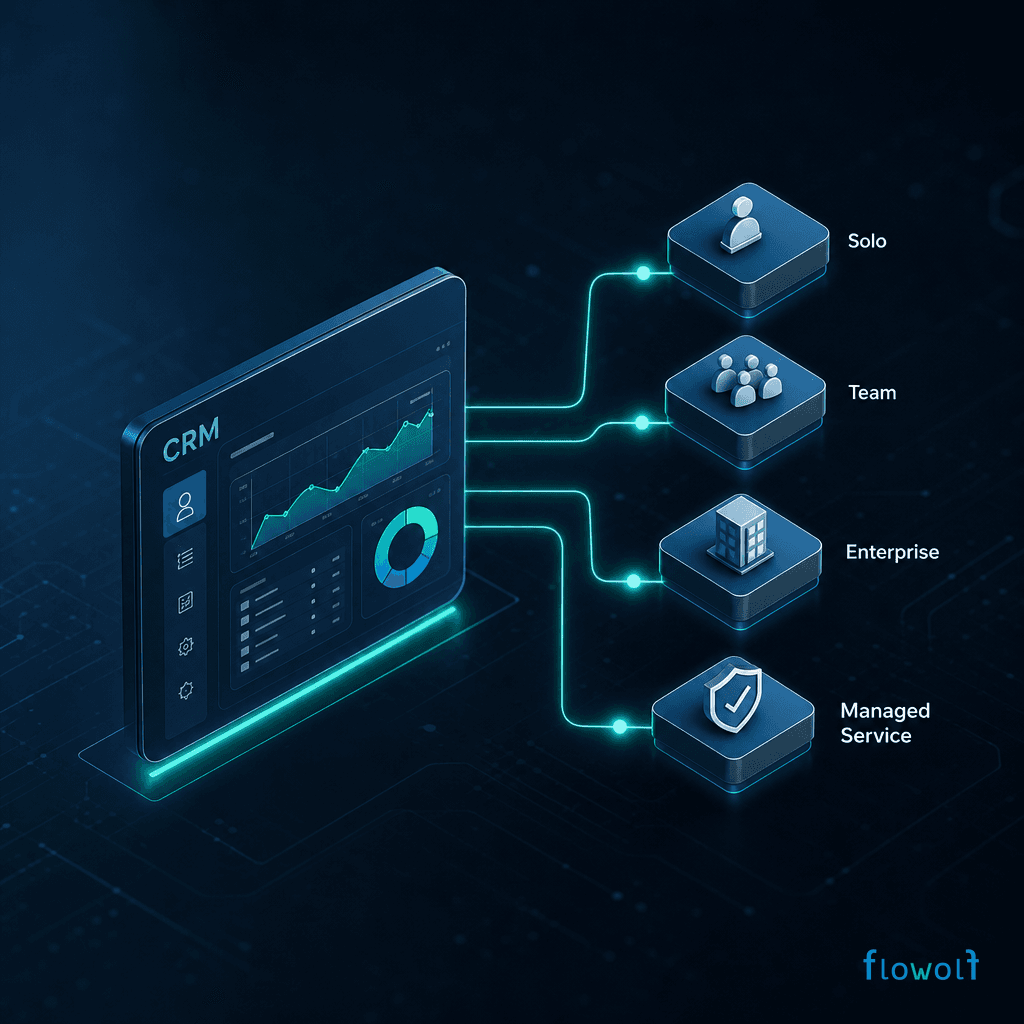
crm.care ships in four deployment paths, sized to how a team actually works: Solo, for one marketing operations manager running an agent end to end; Team, for a function running multiple campaigns with shared oversight; Enterprise, for organizations running Account Engagement or HubSpot across business units with formal governance; and Managed Service, for teams that want floWolf's own specialists running the agent layer on their behalf.
crm.care is built on the same architecture floWolf uses to deliver custom AI agents for enterprise clients, now packaged as a self-service product instead of a bespoke engagement. As an official member of the Anthropic Claude Partner Network and an official partner of OpenAI and Vercel, crm.care's agent layer is built on frontier-model reasoning, not a rules engine dressed up as AI.

🗓️ What to Do This Week
Adopting an AI-Native agent layer doesn't require a quarter-long rollout plan. Because crm.care sits on top of Account Engagement or HubSpot rather than replacing it, most teams can go from signup to a live campaign inside a single week.
Days 1 to 2, connect and observe. Sign up for free beta access at crm.care and connect your existing instance. No migration, no data export. Let the agent run a read-only audit of current workflows, segments and engagement data, producing a baseline of where personalization is shallow and where campaigns are underperforming.
Days 3 to 5, launch the first agent-built campaign. Pick a campaign you'd normally spend days building by hand; a re-engagement sequence, a mid-funnel nurture, an event follow-up. Hand the objective to the agent in plain language, review, adjust guardrails if needed, and launch.
Week 2, compare and calibrate. Run the agent-built campaign alongside your normal cadence and compare engagement, conversion and time spent on configuration. Set governance thresholds so the team has visibility into every decision the agent makes.
Week 3 onward, expand and decide on scale. Extend the agent's remit to a second workflow type, then decide which deployment tier fits: Solo, Team, Enterprise or Managed Service.
The common failure mode in AI adoption is treating it as a strategic initiative that needs a steering committee before anything ships. crm.care is built to avoid that. Free beta access means the first campaign can be live before the internal conversation about "should we do this" has even finished.
🐺 It's Flowtime with crm.care
crm.care by floWolf turns marketing operations from a build-it-by-hand function into one run by agents, on top of the Account Engagement or HubSpot stack you already have.
Try crm.care free today, or get in touch with floWolf to talk about what we could automate for you.
Be kind. Be useful. Bring value. Lead the pack.